
Change Systems, Not Women: Celebrating “Feminine” Leadership
About This Webcast
In honor of International Women’s Day and Women’s History Month, we invite you to join us for a webinar that celebrates feminine leadership. Though there are many ways to lead, some organizations continue to prioritize leadership traits that are traditionally associated with “masculine” qualities. We believe a more balanced approach requires a shift toward valuing “feminine” leadership traits, which can help strengthen culture and address increasingly complex systemic challenges. Traditionally, organizations have supported women leaders by focusing on interventions for individuals. While we recognize that offering access to leadership development for individual women can help advance women at work, we believe it’s only a small piece of the puzzle. To truly support women and the greater collective, organizations must focus on transforming the systems and cultures that perpetuate inequity. Developing both masculine and feminine leadership qualities will benefit not only women, but all individuals and communities. What You’ll Learn An overview of traditionally “masculine” vs. “feminine” leadership qualities Research and experience-based insights about the benefits of feminine leadership How to support people of all genders at your organization by identifying value imbalances in your culture Recommendations for ways to support and develop women leaders with a systems approach, at both the individual and enterprise level A Note About the Terms "Masculine" & "Feminine" Leadership While every individual and their experience is unique, gender is a social identity spanning a broad spectrum. The concepts of “femininity” and “masculinity,” and the terms “masculine” or “feminine” leadership traits, are not necessarily about gender identity (i.e., identifying as male, female, nonbinary, etc.). Rather, they are a way to categorize values and point out systemic imbalances when one set of values (and way of being) is prioritized at the expense of other values and ways of being. Having said that, we recognize that these terms, in and of themselves, are reductionist, and are simply used as a way to make relative comparisons. We hope that — at some point in the future — we will live in a world that does not require categorization, as no categories can capture the complexity inherent in being human.
Speakers
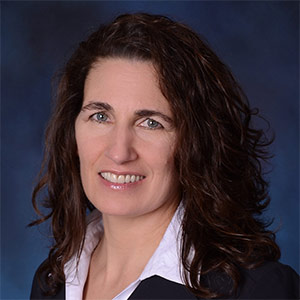
Diane Bergeron
Senior Research Scientist , Center for Creative Leadership

Lynn Miller
Leadership Solutions Partner , Center for Creative Leadership

Kelly Simmons
Global Director of Consultative Solutions , Center for Creative Leadership